

 Our mission
  23 years of experience
  Stories of our patients
  Reviews
  Equipment
  Methodology
  Experts


Possible Causes and What to Do You clean the litter box and notice a pinkish trace in the urine or a dark spot on the stool—your heart sinks. Cat ...
Early Warning Symptoms and Modern Treatment Sometimes changes come almost silently: a cat becomes slightly quieter, lingers a bit longer at the wa...
Do Not Ignore the Symptoms Pet acne is something owners often overlook. However, neglected acne turns into inflammation, infection, and a chronic ...
How to Recognize Them and What to Do Digestive issues, specifically vomiting, loose stool, refusal to eat, and lethargy, are symptoms familiar to ...
What to Do and When to Seek Urgent Veterinary Care Imagine this: in the morning, you notice your cat or dog has vomited again. A single episode ca...
Causes, Symptoms, and Treatment Eye diseases are a common and often serious problem in pets. In the early stages, they may go unnoticed, and owner...
How to properly trim a Cat's nails Cat claw trimming should be a regular course of action. Regular cat nail trimming is a procedure that not only ...
Dog Vaccination at Haabersti Loomakliinik: Reliable Health Protection for Your Pets This procedure is essential to ensure the health and protectio...
Vaccination for Cats: Protect Your Pet from Serious Diseases Vaccination is the only possible way to prevent many severe illnesses and even the lo...
What is a microchip, and where is it Implanted? Any pet can get lost. Having a chip under the skin significantly simplifies the process of finding...
What Microchip is: Installation and Reading In many districts of Tallinn, dog chipping is mandatory. However, even in the absence of such a requir...
Quick and Accurate Diagnostics Cystocentesis is a veterinary procedure where urine for analysis is collected directly from an animal's bladder usi...
Essential Diagnostics Hip and elbow dysplasia is a common hereditary disease affecting large and medium-sized dog breeds. It's characterized by ab...
Accurate Diagnostics Paw X-rays are an indispensable tool in modern veterinary diagnostics, allowing for quick and accurate detection of musculosk...
What You Need to Know Canine and feline pyometra is a serious purulent inflammation of the uterus that can develop in unspayed female dogs and cat...
Feline diabetes, or feline diabetes mellitus, is a fairly common endocrine disorder among our furry friends. Fortunately, modern treatment methods al...
Dear pet owners, at the link below you will find the rules of pet transportation in three languages. And all three links. 1. &nbs...
Diabetes mellitus is the most common disease of the endocrine system in cats. Adult and aged cats are susceptible The most common reason of this path...
Dog Endocrine Disorders: Symptoms and Treatment Endocrine disorders mainly occur in older dogs. Such conditions require special attention and qual...
How to properly trim a dog's nails: Entrust your pet to professionals Every dog owner recognizes the importance of scheduling regular veterinarian...
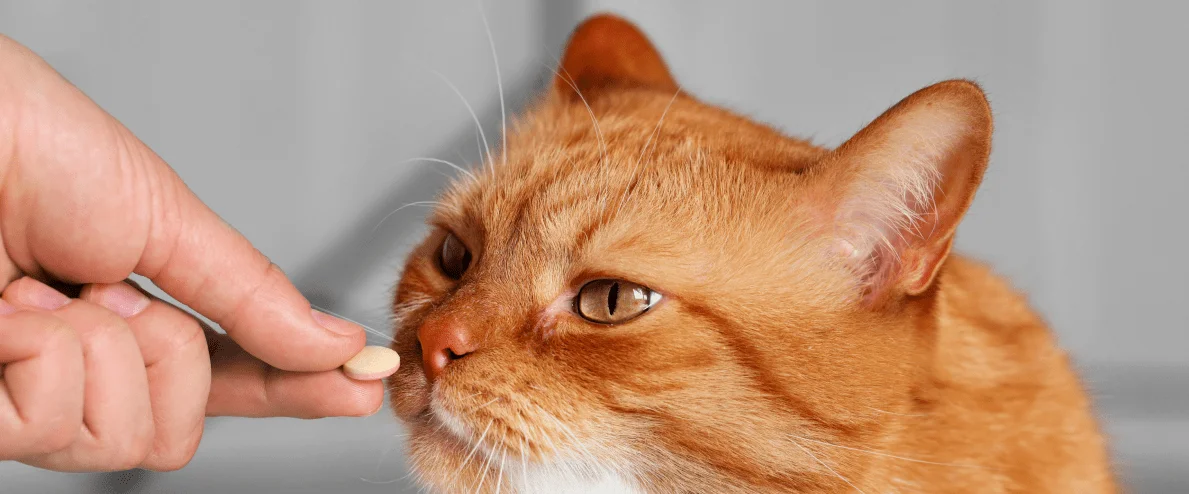
Using medication in the form of pills can cause stress for your cat, as not many cats are willing to swallow pills on their own. Nevertheless, it is crucial to complete the course of treatment. If you encounter difficulties, contact your veterinarian clinic for help and assistance.
Can you give a pill with food?
Some pills have a pleasant taste, and your cat will willingly eat them. Others can be hidden in a small piece of favorite food (butter, cheese, meat, or fish) or even crushed and mixed with something tasty. This makes pill administration much easier.
NB! Some medications should not be crushed or mixed with food. Consult your veterinarian on this matter.
How to give a pill to your cat
Stay calm and gentle, handling your cat with care. If your cat is still highly stressed, consult your veterinarian to explore alternatives. Another person can assist in holding your cat during the procedure.
Another option is to gently wrap your cat in a towel or blanket to prevent scratching.

- Secure your cat in place, using your hands, elbows, forearms, and body.
- Confidently, yet gently, stabilize the cat’s head: place your thumb and index finger on both sides of the upper jaw at the corners of the mouth. This way, you can control the movement of her head without causing discomfort.
- Hold the pill between the thumb and index finger of your other hand.
- Tilt the cat’s head up so that her nose points upward.
- Open the cat’s mouth by placing a finger on the lower jaw incisors and gently pulling it down.
- Once the mouth is open, quickly and deeply push the pill, then lower the head so that the cat can swallow.
- It is crucial to push the pill deep into the throat to ensure the cat swallows it and doesn’t spit it out!

There are devices called “pill dispensers” that eliminate the need to put your fingers in the cat’s mouth. This method may be more acceptable for some owners.
To help the cat swallow the pill and prevent complications, you can give her a small amount of water or food with a syringe.

Always consult your veterinarian to determine the most suitable approach for you and your cat.
Make
an appointment